

From the Author · Behind the Book
The Real Inspiration Behind The Mortician’s Friends
The Mortician’s Friends did not begin with a ghost.
It began with a lonely man standing in a preparation room after everyone else had gone home.
I could see the room before I knew who he was. Stainless steel. White tile. Fluorescent lights that seemed too bright in some places and unable to reach others. The low mechanical hum of refrigeration filled the silence. Above him, the funeral home waited in darkness, its viewing rooms arranged for tomorrow’s mourners.
On the table before him was someone whose name he barely knew.
Yet he would be the last person to wash that person’s hair, straighten their clothes, close their eyes, and make them presentable for the people who loved them.
That image became the heart of The Mortician’s Friends.
The novel follows a mortician whose life has narrowed to the rooms of his funeral home. He spends his nights caring for the dead, then retreats upstairs to an apartment that feels almost as quiet as the rooms below it. He is surrounded by people every day, but nearly all of them have stopped breathing.
Then he begins to see them.
I have spent much of my life around stories of the dead. As a historian, paranormal investigator, and ghost tour owner, I have heard countless accounts of apparitions, unexplained voices, final goodbyes, and figures glimpsed in empty rooms. Some stories are frightening. Others are tragic. A few are strangely comforting.
The stories that remain with me, however, are usually not about what the dead did.
They are about what the living needed them to do.
A grieving mother needs to believe the movement at the end of the hallway was her child. A widower needs the familiar scent in an empty bedroom to mean that he is not entirely alone. Someone carrying guilt needs a voice in the darkness to offer forgiveness, even if that voice comes from within.
That emotional uncertainty shaped the novel.
The question is not simply whether the mortician is seeing ghosts. The deeper question is why he needs to see them.
Grief does not always announce itself through tears. Sometimes it becomes routine. It hides inside work, silence, and habits repeated so often that they begin to resemble a life. A person can continue eating, sleeping, speaking, and performing every expected task while some essential part of them remains trapped in the worst moment they have ever experienced.
The mortician understands death as a profession. He knows what happens to the body. He knows the chemicals, the instruments, and the careful procedures that allow a family to see someone they love one final time.
What he does not understand is how to live with absence.
That contradiction fascinated me. Here is a man who spends his life helping strangers confront death, yet he cannot confront the losses waiting for him in his own rooms. He can repair the visible damage done to a body, but he cannot repair what grief has done to him.
This led me to the central emotional question behind the book:
Who cares for the person who cares for the dead?
Funeral workers occupy an unusual place in our lives. We often meet them during our most painful hours, then forget them once the service ends. They stand quietly at the edges of our grief. They guide us through decisions we never wanted to make. They prepare the people we love so we can recognize them one final time.
Then, after everyone leaves, they remain.
In The Mortician’s Friends, I wanted to stay behind with that person.
The horror of the story grows from isolation rather than spectacle. I did not want the funeral home to feel like a theatrical haunted house filled with rattling chains and doors that slam on command. I wanted it to feel real. Quiet hallways. Muted carpets. Flower arrangements beginning to wilt. A clock ticking in a room where no one is listening.
The dead do not need to leap from the shadows. Their presence is disturbing because they are still.
They watch.
They wait.
And the mortician cannot understand what they want from him.
The title carries more than one meaning. His “friends” may be the figures who begin appearing around him, but the word also reflects the terrible intimacy of his work. He spends more time with the dead than he does with the living. He learns small things about them through their bodies, their clothing, and the objects their families choose for the casket. He witnesses the evidence of entire lives without ever truly knowing the people who lived them.
Some arrive surrounded by mourners. Others leave the world almost unnoticed.
That difference became another important theme in the novel. We like to believe every person will be remembered, that every funeral will be filled, and that someone will stand beside every grave. The truth is not always so comforting. Some people reach the end of their lives with no one left to speak their names.
The mortician notices them because it is his job to notice.
Perhaps they notice him for the same reason.
There is also a recurring use of yellow throughout the story. Against the subdued colors of the funeral home, yellow represents warmth, memory, childhood, and a life that once existed beyond those walls. It is a small flash of brightness that becomes increasingly difficult for the mortician to ignore.
I wanted that color to feel comforting at first. As the story continues, its meaning begins to change.
At its core, The Mortician’s Friends is not only a story about death. It is about loneliness, guilt, memory, and the frightening ways the mind attempts to survive what the heart cannot accept. It asks whether seeing the dead would be a gift or a punishment. It asks whether grief can create its own ghosts. Most of all, it asks what happens when a man who has devoted his life to giving others a peaceful final appearance can no longer hide what is happening inside him.
I will not tell you whether the figures in the funeral home are real.
I am not sure that is the most important question.
Ghosts, after all, do not always come from cemeteries or darkened hallways. Sometimes they are born from a voice we can no longer hear, a room we cannot bring ourselves to change, or a memory we have spent years trying not to revisit.
And sometimes, when the rest of the world has gone home, they are the only friends we have left.
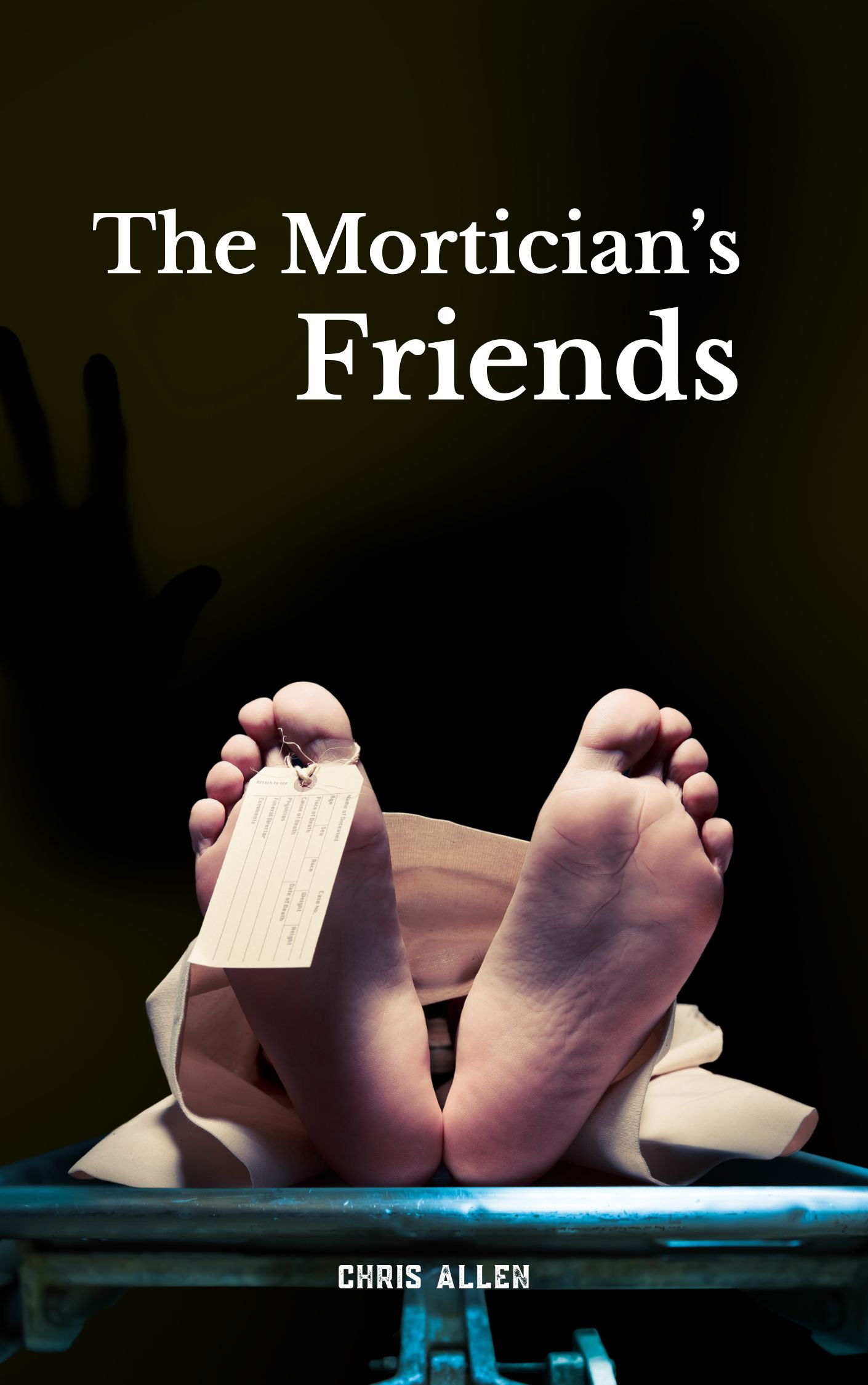
Read the novel
The Mortician’s Friends
Step into Daniel’s funeral home and decide for yourself what waits in its quiet rooms. The novel is available now.
Buy on Amazon